
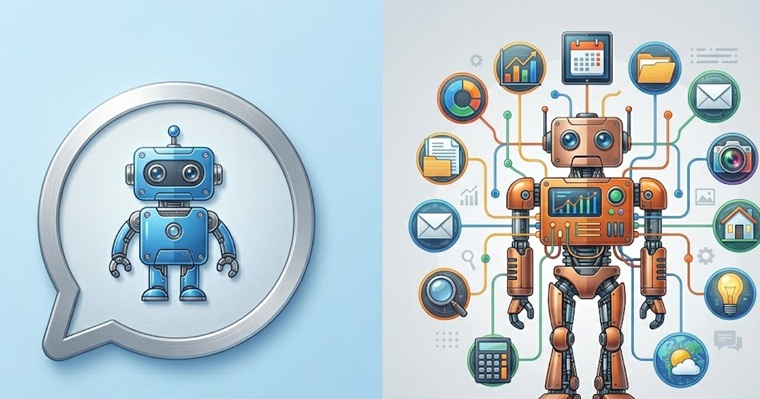
The difference between AI chatbot and AI assistant comes down to scope and autonomy. Chatbots are designed to handle specific, scripted conversations, while AI assistants can understand context, learn from interactions, and take action across multiple tasks and tools.
If you have ever wondered why some AI tools feel narrow and robotic while others feel genuinely useful and adaptive, this is exactly why. The two categories of technology are related but built for fundamentally different purposes, and choosing the wrong one for your use case wastes time, budget, and sometimes the trust of your customers. This guide breaks down how each works, where each one shines, and how to figure out which one your situation actually calls for.
Why This Distinction Actually Matters
Most people use the terms chatbot and AI assistant interchangeably, and vendors often encourage that confusion because calling something an "AI assistant" sounds more impressive than calling it a chatbot. But the difference between these two things has real consequences when you are trying to decide what to deploy in your business.
A chatbot placed where an AI assistant is needed will frustrate users constantly. It will hit its limits, loop back to the same scripted responses, and fail to complete anything that falls outside its predefined boundaries. On the other side, deploying a full AI assistant for a job that only requires simple FAQ responses is like hiring an engineer to answer the same three support questions every day. The capability is wasted and the cost doesn't make sense.
Understanding how AI features are actually structured helps business leaders ask the right questions when evaluating tools rather than accepting whatever a vendor puts in front of them.
Getting this distinction right is increasingly important because AI is no longer a future consideration. It is being deployed inside customer service operations, internal knowledge management systems, sales pipelines, and HR workflows right now. The organisations that understand what they are deploying tend to get better outcomes and fewer surprises.
What a Chatbot Actually Is
A chatbot is a software programme built to simulate conversation within a defined topic area. It works by matching user input against a set of predefined responses, flows, or decision trees. When someone types a question, the chatbot identifies keywords or intent categories and returns the most appropriate scripted answer.
Early chatbots were entirely rule-based. They could only respond to specific phrases and would break down completely the moment a user said something unexpected. Modern chatbots have improved significantly, with natural language processing helping them understand variation in how questions are phrased. But at their core, they are still built around boundaries.
Think about the last time you used a customer service chat widget on a retail or banking website. You were almost certainly interacting with a chatbot. It could tell you store hours, help you track a parcel, or reset your password. The moment you asked something outside those use cases, it either failed or handed you off to a human.
That is not a flaw. It is by design. Chatbots are built to handle high volumes of predictable requests quickly and consistently. They are excellent at doing one thing very reliably, and that reliability is genuinely valuable in the right context.
What an AI Assistant Actually Is
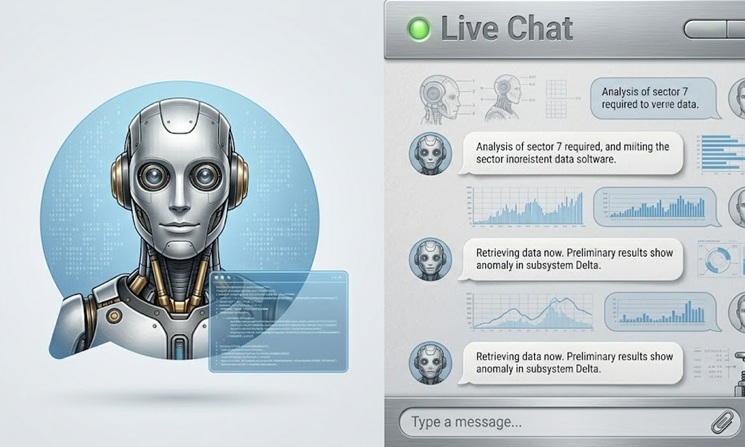
An AI assistant operates at a fundamentally different level. Rather than matching inputs to preset responses, it reasons about what the user needs, draws on contextual understanding, connects to external tools and data sources, and can take multi-step action to complete a goal.
When you ask an AI assistant to schedule a meeting, pull together a briefing document from three different sources, draft a follow-up email, and flag the most important items from your inbox, it is doing something categorically different from what any chatbot can do. It is maintaining context across a conversation, making decisions about sequence and priority, and executing actions rather than just returning information.
This is where the difference between AI chatbot and AI assistant becomes most visible in practice. A chatbot tells you what your account balance is. An AI assistant can tell you what your balance is, identify the three largest expenses from last month, flag one that looks anomalous, and draft a report summarising all of it before your next finance review.
The architecture behind this capability involves large language models, tool integration layers, memory systems, and increasingly autonomous decision-making logic. Understanding how AI architecture enables this kind of reasoning helps clarify why building a genuinely capable AI assistant is significantly more complex than deploying a chatbot.
Comparing the Two Side by Side
| Feature | AI Chatbot | AI Assistant |
|---|---|---|
| Primary Function | Answer predefined questions | Understand goals and take action |
| Contextual Memory | Limited or none across sessions | Maintains and applies context |
| Tool Integration | Minimal, usually standalone | Connects to calendars, files, apps |
| Learning Over Time | Static unless manually updated | Adapts based on interactions |
| Complexity Handling | Designed for simple, predictable tasks | Handles multi-step, open-ended tasks |
| Best Use Case | Customer support, FAQ handling | Productivity, research, workflow automation |
| Setup Complexity | Low, often template-based | Higher, requires integration and configuration |
The 4 Types of AI Worth Knowing
Since the conversation around chatbots and assistants sits inside a broader AI landscape, it helps to know where these tools fit within the wider taxonomy of AI systems.
Reactive Machines are the most basic type. They process inputs and produce outputs based on fixed rules with no memory or learning. Classic rule-based chatbots fall into this category.
Limited Memory AI can reference recent interactions to inform current responses. Most modern chatbots and early AI assistants operate at this level. They remember the last few turns of a conversation but don't build long-term knowledge about the user.
Theory of Mind AI refers to systems that can understand and model the beliefs, intentions, and emotional states of the people they interact with. This remains largely a research goal rather than a deployed product, though some advanced AI assistants are beginning to approach aspects of this capability.
Self-Aware AI is theoretical. Systems at this level would have something resembling consciousness and subjective experience. We are nowhere near this in deployed commercial products, despite how some products are marketed.
For practical business purposes, the relevant distinction is between limited memory reactive systems (most chatbots) and more capable limited memory systems with tool access and reasoning layers (modern AI assistants). Everything else is either foundational history or future speculation.
Is ChatGPT a Chatbot or an AI Agent?
This question comes up constantly, and the answer has evolved as the product has developed. In its most basic form, ChatGPT is a conversational AI interface built on a large language model. When it was first released publicly, it functioned primarily as a sophisticated chatbot, responding to prompts within a single session with no persistent memory and no ability to take action in the world.
As ChatGPT has added features like browsing, code execution, memory, and plugin or tool integrations, it has moved meaningfully toward the AI assistant end of the spectrum. With the right setup, it can now complete multi-step tasks, remember information across sessions, and interact with external tools and data.
Whether it qualifies as a full AI agent depends on how you define that term. Agents typically imply autonomous goal-directed behaviour, where the system plans and executes a sequence of actions with minimal human prompting for each step. ChatGPT with tools enabled is approaching this but still operates primarily in response to direct human prompts rather than acting independently toward long-horizon goals.
The honest answer is that it is more than a traditional chatbot but not yet a fully autonomous agent. It sits in a category that most of the industry is still working out language for.
Things To Know
- Marketing language obscures real capability. Many products marketed as AI assistants are sophisticated chatbots. Ask specifically whether the tool can maintain context across sessions, integrate with external systems, and take multi-step action on its own.
- Chatbots are not inferior, they are specialised. For high-volume, predictable customer interactions, a well-designed chatbot outperforms a general-purpose AI assistant. The right tool for the job matters more than the most advanced tool.
- AI assistants require more data governance. Because they connect to more systems and handle more sensitive tasks, the security and compliance requirements around AI assistants are meaningfully higher than those for isolated chatbots.
- Hybrid deployments are increasingly common. Many organisations use chatbots as the first layer of customer interaction with AI assistants handling escalations and internal team workflows. The two technologies are not mutually exclusive.
- Context window size affects assistant quality significantly. An AI assistant that can only remember a few thousand words of conversation history is limited in how complex the tasks it can handle effectively. This is a key spec to evaluate when choosing a platform.
- User trust is built differently for each. People expect chatbots to be limited. When an AI assistant fails to complete a task it implied it could handle, the trust damage is greater. Setting accurate expectations matters.
The 3 Best AI Chatbots and What Makes Them Stand Out
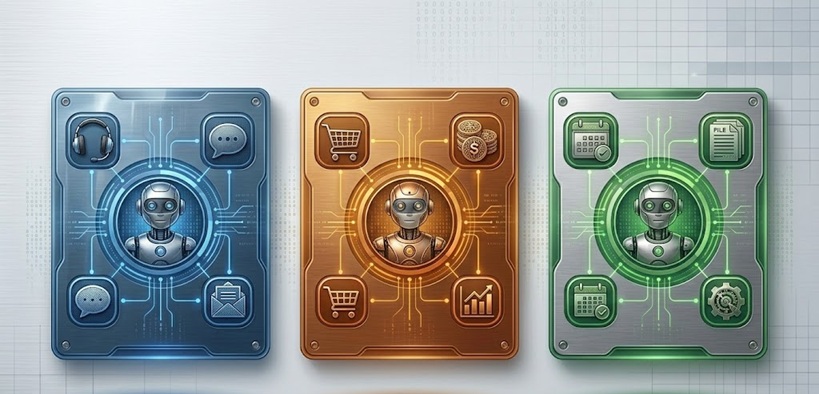
Rather than ranking by a single metric, the most useful way to evaluate AI chatbots is by what they are actually best at in a business context.
Intercom Fin is widely regarded as one of the strongest options for customer support use cases. It resolves a significant portion of support tickets autonomously by drawing on your knowledge base and escalates to human agents cleanly when it reaches its limits. For businesses with high ticket volumes, the operational impact is substantial.
Drift (now part of Salesloft) built its reputation in sales-focused conversational marketing. Its chatbot captures leads, qualifies prospects, and routes conversations to the right sales representative at the right moment. For B2B companies with complex sales cycles, the targeting capability is the main differentiator.
Claude.ai sits in an interesting position because it is genuinely difficult to categorise as purely a chatbot. At its base it handles conversation excellently, but its reasoning depth, honesty about limitations, and ability to work through complex problems put it closer to the AI assistant end of the spectrum. For business users who need something that goes beyond FAQ handling, it is consistently one of the most capable options available.
Which AI Is the Most Honest?
Honesty in AI is a more specific quality than it might first appear. It includes whether the system acknowledges uncertainty, whether it corrects itself when it makes errors, whether it refuses requests that conflict with accurate information, and whether it tells users when it cannot help rather than fabricating a response.
By these measures, Claude has consistently been rated highly in independent evaluations for its willingness to express uncertainty, correct mistakes, and decline to generate responses it identifies as potentially harmful or inaccurate. Anthropic has made constitutional AI and honest behaviour a central part of how the model is trained, which tends to produce outputs that are more calibrated about their own confidence levels.
ChatGPT and Gemini are both capable and have improved significantly on honesty dimensions over successive versions, but both have documented tendencies toward confident-sounding responses in areas where more uncertainty would be appropriate.
For business users where the cost of a confidently wrong AI response is high, like legal, financial, or medical adjacent contexts, prioritising a platform with a strong track record on honesty is worth treating as a core evaluation criterion rather than a nice-to-have.
Understanding how AI security and trust considerations affect which platforms are appropriate for business use provides additional context for making this kind of evaluation systematically.
How to Choose the Right One for Your Business
Knowing the difference between AI chatbot and AI assistant is most useful when it informs an actual decision. Here is a practical framework for reaching that decision without overcomplicating it.
| Business Need | Recommended Approach |
|---|---|
| High-volume repetitive customer queries | Purpose-built AI chatbot with knowledge base integration |
| Internal productivity and task automation | AI assistant with tool and calendar integration |
| Lead capture and sales qualification | Sales-focused chatbot like Drift or similar |
| Research, drafting, and complex analysis | AI assistant with strong reasoning capability |
| 24/7 customer support without human agents | Chatbot with clear escalation paths to humans |
| Workflow automation across multiple systems | AI assistant with broad tool access and memory |
The single most useful question to ask before choosing a tool is whether the tasks you need handled are predictable or open-ended. Predictable tasks are chatbot territory. Open-ended, multi-step, contextual tasks require an AI assistant. Many organisations need both, deployed in different parts of their operation.
For teams building out their first formal AI implementation, the guide to AI deployment and risk management covers how to structure that process from platform selection through ongoing governance.
Understanding the Difference Between AI Chatbot and AI Assistant Going Forward
The difference between AI chatbot and AI assistant will only become more practically important as AI becomes more deeply embedded in how businesses operate. The gap between the two categories is widening rather than narrowing. Chatbots are becoming more polished and easier to deploy. AI assistants are becoming more capable and more autonomous. The middle ground is shrinking.
Organisations that understand what they are deploying, why they chose it, and what its actual limitations are will consistently outperform those that treat AI as a generic category of software. The technology is too consequential and moving too fast to evaluate it loosely.
Get clear on what you need, match the tool to the task, and build the governance to make sure it keeps working the way you expect it to.
Frequently Asked Questions
What is the difference between AI assistant and chatbot?
A chatbot handles specific, scripted conversations within predefined boundaries, while an AI assistant understands context, learns over time, and can take multi-step action across different tools and systems. The core distinction is scope: chatbots do one thing reliably, AI assistants handle open-ended complexity.
What are the 4 types of AI?
The four types are reactive machines, limited memory AI, theory of mind AI, and self-aware AI, ranging from basic rule-following systems to theoretical conscious machines. Most commercial products today operate in the limited memory category, with AI assistants representing the more advanced end of that tier.
Is ChatGPT a chatbot or an AI agent?
ChatGPT began as a sophisticated conversational AI and has evolved toward AI assistant territory as it gained memory, tool access, and multi-step reasoning capabilities. It is more capable than a traditional chatbot but does not yet operate as a fully autonomous AI agent in most deployment contexts.
What are the 3 best AI chatbots?
Intercom Fin leads for customer support, Drift excels in sales-focused conversational marketing, and Claude stands out for complex reasoning and business productivity tasks. The best choice depends entirely on your specific use case rather than a single universal ranking.
Which AI chat is the most honest?
Claude has been consistently rated highly for honesty, including its willingness to acknowledge uncertainty, correct mistakes, and decline to generate inaccurate responses. For business contexts where confident but wrong answers carry real risk, prioritising platforms with strong honesty track records is a worthwhile evaluation criterion.