
Air gapped AI refers to artificial intelligence systems deployed on hardware that is physically and logically isolated from the internet and any external network. It is the highest level of data security available for AI deployment, used when the stakes of a breach are simply too high to accept any outside connectivity.
Most businesses exploring private AI deployment are thinking about on-premise setups or private cloud configurations. Those are solid options for the majority of use cases. But there is a category of organizations where even a tightly secured private server with VPN access is not enough. Government agencies handling classified intelligence, defense contractors processing weapons systems data, critical infrastructure operators, and research institutions working on sensitive discoveries all operate in environments where network isolation is not a preference but a requirement. This guide explains what air gapped AI looks like in practice, how it gets deployed, what it costs operationally, and whether your organization actually needs it or just thinks it does.
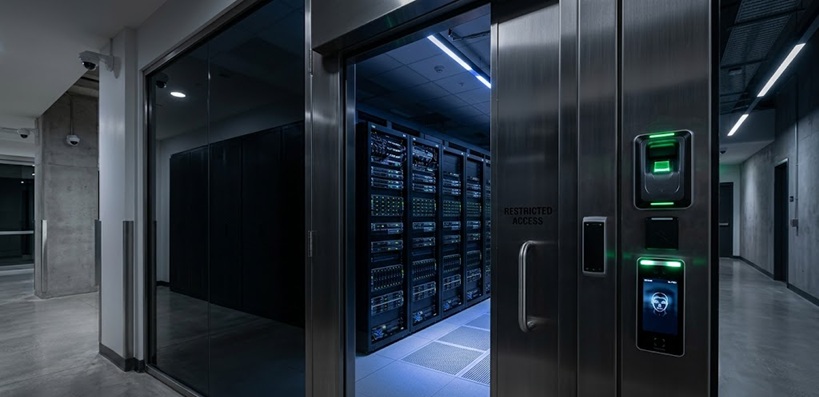
What Air Gapped Actually Means
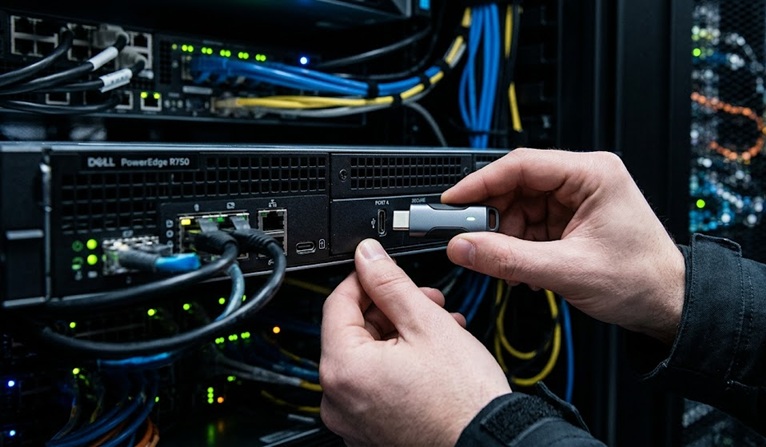
The term comes from the physical gap of air between an isolated system and any connected network. There is no ethernet cable running to the internet. There is no WiFi adapter enabled. There is no Bluetooth. Data gets in and out through physical media only, meaning USB drives, optical discs, or air gapped file transfer workstations that themselves have no outside connectivity.
This is fundamentally different from a firewall, a VPN, or even a private cloud deployment. All of those still involve data traveling over networks, even if those networks are encrypted and access-controlled. An air gapped system does not transmit data across any network at all. The isolation is physical, not just logical.
In the context of AI, this means the model, the inference engine, the training data, and any outputs generated by the system all live on hardware that has never touched the public internet after deployment. Updates to the model require physical media transfers. New training data gets moved in the same way. Outputs are reviewed and extracted through controlled physical processes.
It sounds extreme because for most organizations it is. But for the environments where it applies, it is the only architecture that satisfies the actual threat model they are operating under.
Who Needs Air Gapped AI and Why

Defense and Intelligence Applications
Military and intelligence agencies were the original architects of air gap protocols, long before AI entered the picture. Classified systems have operated in full network isolation for decades because the consequences of a breach in those environments are measured in lives and national security outcomes, not data breach notification costs.
Bringing AI into those environments does not change the isolation requirement. It adds capability to infrastructure that already demands physical separation. Agencies using AI for signals intelligence analysis, threat pattern recognition, or logistics optimization need models that run entirely within classified networks that have never been connected to the outside world.
Critical Infrastructure Operators
Power grids, water treatment facilities, nuclear plants, and financial clearing systems fall into a category where disruption has cascading societal effects. The industrial control systems managing these environments have increasingly incorporated AI for anomaly detection and predictive maintenance. Running those AI components on air gapped networks ensures that a compromised external system cannot reach the operational technology managing the physical infrastructure.
Healthcare and Legal Environments With Extreme Privacy Requirements
Not every air gap use case involves state secrets. Hospitals processing highly sensitive research data, forensic laboratories handling evidence, and law firms managing matters where even the existence of the case is confidential sometimes require full network isolation for specific AI workloads. The threat model here is less about nation-state actors and more about ironclad privilege protection and regulatory compliance with zero tolerance for accidental disclosure.
Understanding how AI security architecture gets designed for these environments helps organizations assess whether their actual threat model requires true air gapping or whether a well-secured private deployment would be sufficient.
How Air Gapped AI Deployments Work in Practice
Getting Models Into an Isolated Environment
The process of standing up an air gapped AI system starts before any hardware is even racked. Model weights, which are the large files that define how the AI behaves, need to be downloaded, verified, and transferred to the isolated environment through approved physical media channels.
In a typical secure deployment, this means downloading the model on a separate, controlled staging machine, running integrity verification to confirm the files have not been tampered with, transferring them to sanitized physical media, and physically carrying that media into the isolated environment where it gets loaded onto the air gapped hardware.
Any updates to the model go through the same process. There is no automatic update mechanism. Every change is deliberate, documented, and physically executed.
| Transfer Stage | Process | Security Control |
|---|---|---|
| Model Download | Retrieved on internet-connected staging machine | Hash verification against known checksums |
| Media Preparation | Written to sanitized physical transfer device | Write-once media or sanitized drives |
| Physical Transfer | Carried into the secure perimeter | Chain of custody documentation |
| Installation | Loaded onto air gapped hardware | Integrity check repeated on secure side |
| Output Extraction | Results moved out through reverse process | Content review before extraction |
Running Inference on Isolated Hardware
Once the model is installed, day-to-day operation looks similar to any other on-premise AI deployment from the user's perspective. Analysts or applications submit queries, the model processes them, and responses come back. The difference is entirely in what happens beneath the surface. There is no telemetry going out. There are no API calls to external services. The system is self-contained.
This creates some operational constraints worth understanding. Retrieval-augmented generation, which lets AI systems pull in fresh information from connected databases, requires that those databases also live within the air gapped environment. Real-time information is only as current as the last physical data transfer into the system. For most air gap use cases, that is an acceptable trade-off given the security benefits.
The AI architecture decisions made early in an air gapped deployment are difficult to change later, which makes getting the initial design right considerably more important than in a standard cloud or on-premise setup.
Hardware Considerations
Air gapped AI systems cannot rely on cloud-based hardware scaling. Whatever compute you provision at the start is what you have. That makes accurate capacity planning critical.
| Organization Type | Typical Model Size | Hardware Approach |
|---|---|---|
| Small secure team, limited queries | 7B to 13B parameters | Single high-end workstation with GPU |
| Mid-size secure department | 13B to 34B parameters | Dedicated server with multiple GPUs |
| Agency or enterprise scale | 34B to 70B parameters | Multi-node GPU cluster, on-site |
| Research with multimodal needs | Specialized large models | Custom hardware procurement required |
Redundancy planning matters more here than in connected environments. When hardware fails in a cloud setup, capacity shifts automatically. In an air gapped environment, a hardware failure means reduced capacity until a physical replacement is sourced, sanitized, and installed. Building redundancy into the initial hardware spec is not optional in production environments.
The Operational Reality of Running Air Gapped AI
What the Day-to-Day Actually Looks Like
Organizations that run air gapped systems develop disciplined operational rhythms around the constraints. Model updates happen on a scheduled cycle rather than on-demand. Data imports follow documented procedures with multiple sign-offs. Output extractions are reviewed before anything leaves the secure perimeter.
This deliberateness is actually a feature in certain contexts. Every change to the AI environment is tracked, documented, and auditable. In regulated industries, that audit trail has real value. In classified environments, it is mandatory.
The challenge is that it also slows things down compared to what teams accustomed to cloud AI tools might expect. Prompt iteration that takes seconds on a cloud platform might take days in an air gapped environment if it requires importing new data or pushing a model update through the physical transfer process.
A useful reference point is the approach covered in AI guide resources on phased deployment, which applies directly here. Starting with a narrow, well-defined use case before expanding the scope of the air gapped system prevents scope creep from creating operational problems before the team has developed the procedural muscle for managing the environment.
Staffing and Expertise Requirements
Running an air gapped AI system requires people who understand both the AI stack and the security protocols governing the isolated environment. That combination is genuinely rare and commands significant compensation. The specialized roles involved in managing classified or air gapped AI environments sit among the higher-paying positions in the technology sector, reflecting the scarcity of people who hold the necessary clearances alongside practical AI engineering skills.
Organizations standing up these systems for the first time typically underestimate the staffing complexity. Plan for dedicated personnel who own the model management lifecycle, not just IT generalists who handle it as a secondary responsibility.
Air Gapped vs. Other Private Deployment Approaches
The decision between a full air gap and a well-secured private deployment is not always obvious. Here is a practical way to think through it.
If your primary concern is data privacy and compliance, a properly configured on-premise deployment with strong access controls and no public internet exposure typically satisfies the requirement without the operational overhead of true air gapping.
If your concern involves threat actors with sophisticated capabilities, including nation-state level attacks, insider threats, or any scenario where even encrypted network traffic represents an unacceptable risk, then air gapping addresses the threat model that other approaches cannot.
The honest assessment for most businesses is that true air gapping is more than they need. The companies that actually need it tend to know they need it before they start researching options. The regulatory, contractual, or mission-context requirements usually make the decision for them.
Things To Know
A few details that tend to get overlooked in early conversations about air gapped AI deployments:
Physical security matters as much as digital security. An air gapped system is only as secure as the room it sits in. Physical access controls, surveillance, and personnel vetting are as important as any technical security measure.
Insider threat is the primary remaining risk. Once you eliminate network-based attack vectors, the realistic remaining threat is someone with physical access to the system. Personnel screening and access logging become the frontline security controls.
Testing updates before deploying them matters enormously. In a connected environment, a bad model update can be rolled back quickly. In an air gapped environment, rolling back means another physical transfer cycle. Staging environments that mirror the air gapped setup help catch problems before they reach production.
Energy and cooling infrastructure needs planning. Air gapped systems running large GPU workloads generate substantial heat and draw significant power. Facilities planning needs to account for this early.
Documentation requirements are extensive. Every procedure involving the air gapped environment needs to be documented thoroughly, not just for compliance but because procedural consistency is what prevents security incidents in physical transfer workflows.
Open source models are strongly preferred in these environments. Proprietary models that require license validation calls or usage telemetry reporting are fundamentally incompatible with true network isolation. The open source model ecosystem is the practical foundation for almost every air gapped AI deployment.
When Air Gapped AI Is Worth Every Bit of the Overhead
The operational complexity and cost premium of air gapped AI is real. It demands more from your team, more from your facilities, and more from your planning processes than any other deployment approach. For organizations where the threat model justifies it, that overhead is not just acceptable, it is the point.
The isolation itself is the product. Everything else the system does, answering queries, analyzing documents, detecting anomalies, supporting decisions, happens inside a perimeter that no external actor can reach. For the organizations that need that guarantee, no other architecture delivers it.
Frequently Asked Questions
What is an air gap in AI?
An air gap in AI refers to complete physical and network isolation of the AI system, meaning no internet connection, no external network access, and no wireless interfaces of any kind. Data moves in and out only through controlled physical media transfers, making it the most secure deployment architecture available for sensitive AI workloads.
What does "air gapped" mean?
Air gapped means a system is physically isolated from all external networks, with a literal gap of air between it and any connected infrastructure. The term originated in military and government computing and has expanded to describe any deployment where network isolation is used as the primary security control.
What is the $900,000 AI job?
The $900,000 AI job typically refers to highly specialized AI safety researchers or principal AI scientists at top technology companies whose total compensation packages have reached that range due to equity and bonuses. Roles combining AI engineering expertise with security clearances for classified environments also command exceptional compensation reflecting the scarcity of qualified candidates who meet both requirements.
What is the 30% rule in AI?
The 30% rule in AI is a guideline suggesting that AI should automate roughly 30% of a given workflow, leaving the remaining 70% to human judgment and contextual reasoning. It helps organizations identify realistic automation targets without over-engineering processes that still depend on human decision-making.
What jobs will no longer exist in 2030?
Roles centered on repetitive data entry, basic document processing, routine customer query handling, and manual report generation are widely expected to decline significantly by 2030 as AI systems absorb those functions. However, most analysts project that job transformation rather than wholesale elimination will be the dominant pattern, with new roles emerging around AI management, oversight, and deployment.