
A private LLM for business is a large language model deployed on your own infrastructure or a dedicated environment, giving your organisation full control over its data, outputs, and access permissions. Unlike public AI tools that send your queries to shared cloud servers, a private setup keeps everything inside your walls -- literally or virtually.
If you have ever hesitated before pasting a sensitive client contract into a popular AI chatbot, you already understand the core problem this solves. This guide walks through exactly how private LLMs work, what they realistically cost, which options are worth your attention, and how to decide if this path makes sense for your business right now.
What Is a Private LLM for Business, Exactly?
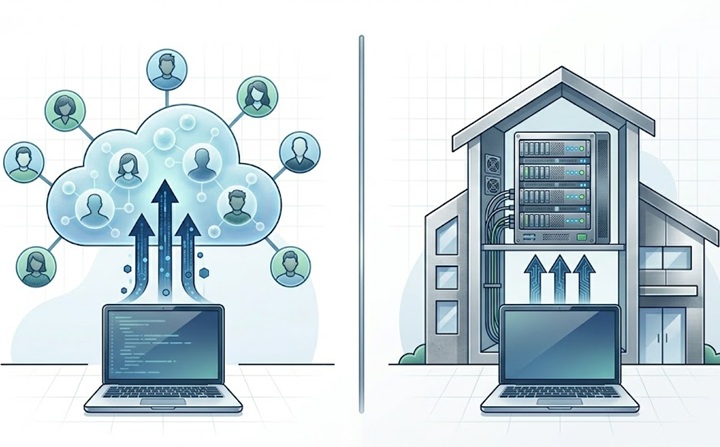
The term gets used loosely, so it helps to be precise. A private LLM for business refers to one of three main configurations: a self-hosted open-source model running on your own servers, a dedicated cloud instance where the model runs in an isolated environment only your organisation can access, or a fine-tuned proprietary model deployed under a private agreement with a vendor.
What all three share is the same fundamental promise: your data does not get mixed with other companies' queries, does not train someone else's model, and does not sit in a shared inference log that a vendor's employees might someday review.
This is very different from simply paying for a premium subscription to a public AI tool. Even enterprise tiers of consumer AI products often involve data flowing through shared infrastructure. "Private" means something specific and stronger than "paid."
Why Businesses Are Making the Switch
The shift towards private AI deployments is being driven by a handful of very practical concerns, not just abstract privacy philosophy.
Data confidentiality is the biggest driver. Industries like legal, healthcare, finance, and defence routinely handle information that cannot leave controlled environments. Feeding client data into a third-party AI tool can violate contractual obligations, professional ethics rules, or outright regulations like HIPAA or GDPR. A private deployment sidesteps that problem entirely.
Customisation is the second major reason. Public models are trained to be generalists. A private model can be fine-tuned on your company's internal documentation, product catalogue, compliance guidelines, or customer service history. The result is an AI that actually sounds like it knows your business rather than a generic assistant trying to sound helpful.
Predictability matters more than most people realise. When you depend on a third-party API, you are also dependent on that provider's pricing changes, outages, model updates, and policy decisions. A private deployment gives your engineering team something they can control, version, and audit.
Things To Know Before You Deploy
Before committing to a private LLM for business, there are several practical realities worth understanding:
- Open-source models like LLaMA, Mistral, and Falcon have permissive licences for commercial use, but the hardware and engineering costs are real and not trivial.
- Running a capable model locally requires significant GPU memory. A 7-billion parameter model needs roughly 14GB of VRAM at minimum for decent inference speed.
- Fine-tuning a model on your proprietary data is different from simply hosting one. Fine-tuning requires curated training data, compute time, and expertise.
- Model updates are your responsibility in a private setup. You do not get automatic improvements the way you would with a managed service.
- Security in a private deployment is only as strong as your infrastructure. Hosting a model on a misconfigured server is not meaningfully safer than using a public tool.

The Main Options Available Right Now
The market for private AI deployment has matured considerably since 2023. You have more real choices today than at any point before, which is good news for businesses with varying budgets and technical capabilities.
Open-Source Self-Hosted Models
Models like Meta's LLaMA series, Mistral, Falcon, and Phi from Microsoft are available for download and commercial use. Tools like Ollama and LM Studio have made local deployment remarkably accessible even for teams without dedicated ML engineers. You can have a basic setup running on a capable workstation within an afternoon.
The trade-off is that you own the infrastructure problem. Hardware procurement, scaling, security patching, and performance tuning all land on your team.
Dedicated Cloud Deployments
Several major cloud providers, including AWS, Azure, and Google Cloud, offer ways to deploy foundation models in isolated environments where your data never touches shared compute. This is often the middle path for businesses that want privacy without managing physical hardware.
The cost is higher than shared API access but lower than building out on-premises GPU infrastructure from scratch.
Managed Private AI Vendors
A growing number of specialised vendors now offer private LLM deployment as a service. These providers handle the infrastructure while contractually guaranteeing data isolation. For businesses without deep technical teams, this option trades some control for significant operational simplicity.
Understanding the features available across these deployment models helps you match the right approach to your specific requirements rather than defaulting to whatever your cloud provider is currently promoting.
| Deployment Type | Control Level | Technical Requirement | Typical Cost Range |
|---|---|---|---|
| Self-Hosted Open Source | Highest | High (ML/DevOps team needed) | Hardware cost plus staff time |
| Dedicated Cloud Instance | High | Medium (cloud expertise) | $500 to $5,000+ per month |
| Managed Private Vendor | Medium-High | Low (vendor handles ops) | $1,000 to $20,000+ per month |
| Fine-Tuned Private Model | Highest | High (data science team) | $10,000 to $100,000+ project cost |
How Much Does It Actually Cost?
This is the question every finance team wants answered before anything else moves forward. The honest answer is that costs vary enormously depending on scale, but the ranges below give a realistic picture.
For a small team running a 7B or 13B parameter model locally on a single high-end workstation, the hardware investment typically runs between $3,000 and $8,000 for a capable GPU setup. Ongoing costs are minimal -- electricity and maintenance.
For a mid-sized company deploying on dedicated cloud infrastructure with enough capacity to serve multiple departments simultaneously, monthly costs typically fall between $2,000 and $8,000 depending on usage volume and the model size.
For an enterprise requiring fine-tuned models, high availability, compliance documentation, and managed security, total first-year investment commonly lands between $50,000 and $250,000 when you factor in implementation, infrastructure, and internal staff time.
One practical tip: before committing to any deployment path, run a small pilot on cloud infrastructure first. It lets you validate whether the model quality meets your use case before spending on hardware or long-term contracts.
Understanding how the architecture of different deployment options scales under load also helps you avoid choosing a setup that works perfectly at 10 users but becomes unusable at 200.

Which Option Is Right for Your Business?
Choosing the right path comes down to three questions: How sensitive is your data? How much technical capacity does your team have? And how quickly do you need to move?
If your data is highly sensitive and your team has engineering depth, self-hosted open-source is worth the investment. You get maximum control, no vendor dependency, and the ability to fine-tune the model closely to your domain.
If your data is sensitive but your technical team is lean, a managed private vendor is the pragmatic choice. You are paying a premium for operational simplicity, but for most small and mid-sized businesses, that trade-off is entirely rational.
If you are primarily concerned about keeping internal data out of shared training pipelines but do not handle truly regulated information, a dedicated cloud instance from a major provider with strong data processing agreements is often sufficient.
One area that gets overlooked in these decisions is security planning. A private deployment does not automatically mean a secure one. Access controls, encryption at rest and in transit, audit logging, and incident response planning need to be part of the setup from day one, not retrofitted later.
Practical Tips for Getting Started
Once you have settled on a deployment approach, a few practical steps make the rollout smoother.
Start with a single use case rather than trying to replace all AI tools at once. Pick the workflow with the clearest ROI and the most obvious data sensitivity concern. Prove the value there before expanding.
Build an evaluation dataset before you deploy. This is a set of real prompts and expected outputs drawn from your actual business context. It lets you measure whether your private model is actually performing better than the alternative, rather than just assuming it is.
Document your data handling setup carefully. If you are in a regulated industry, you will need to show auditors exactly what data touched the model, when, and how. Building that documentation from the start is dramatically easier than reconstructing it later.
Run a basic red-teaming exercise after deployment. Have a few team members try to get the model to output sensitive information or behave unexpectedly. The vulnerabilities you find internally are far less costly than the ones an attacker finds later. A solid setup guide for your specific deployment environment can help structure this process.
Final Verdict on Private LLM for Business
The case for private LLM for business is strongest when data confidentiality, regulatory compliance, or deep customisation are genuine requirements rather than nice-to-haves. For organisations that check any of those boxes, the investment is not just defensible -- it is increasingly necessary as AI becomes embedded in core workflows.
The barrier to entry has dropped considerably over the past two years. Open-source models are more capable, deployment tooling is more accessible, and managed vendors have made private AI available to businesses that could not have afforded it in 2022.
If you are still relying entirely on public AI tools for sensitive work, this is the right time to evaluate whether a private deployment fits your risk profile and your budget. The answer, for more businesses than you might expect, is yes.
Frequently Asked Questions
Is there any private LLM?
Yes, several strong options exist including Meta's LLaMA series, Mistral, and Falcon, all of which can be deployed privately on your own infrastructure or through dedicated cloud environments.
These models are open-source and commercially usable, meaning businesses can host and customise them without sending data to a third-party provider.
How much does a private LLM cost?
Costs range from a few thousand pounds for a small local setup to over $100,000 annually for enterprise-grade deployments with fine-tuning and managed infrastructure.
The biggest variables are model size, usage volume, and whether you are self-hosting or using a managed vendor.
Is private LLM any good?
Yes -- modern private models like LLaMA 3 and Mistral perform at a level that meets most business use cases, especially when fine-tuned on domain-specific data.
For general-purpose tasks, they may not yet match the very top public models, but for specialised internal use, they often outperform them.
Is anything LLM free for commercial use?
Yes, models like Mistral 7B, LLaMA 3 (under Meta's commercial licence), and Falcon are free to use commercially with some conditions depending on company size and use case.
Always review the specific licence terms before commercial deployment, as conditions vary across model families.
Can you run LLM locally for free?
Yes, tools like Ollama and LM Studio let you run capable open-source LLMs on a local machine at no software cost, though you need sufficient hardware to run them smoothly.
A modern GPU with at least 8-16GB of VRAM handles smaller models well, making local deployment genuinely accessible for individuals and small teams.