
The ai agent vs ai assistant difference comes down to one thing: an assistant responds to what you ask, while an agent takes independent action to complete a goal on your behalf. If you have been using the terms interchangeably, you are not alone, but mixing them up can lead to choosing the wrong tool for the job entirely.
This distinction matters more than it might seem on the surface. One tool waits for you. The other one gets to work. Understanding where that line is drawn helps you make smarter decisions about which technology fits your workflow, your budget, and the kind of outcomes you actually want. Read on and we will break down exactly how these two compare, where each one shines, and which option is worth your time depending on what you are trying to accomplish.

What Is an AI Assistant?
An AI assistant is a conversational tool designed to respond to your questions, generate content, summarise information, and help you think through problems. The key word there is respond. It does what you ask, when you ask it, and stops when you stop.
Think of it like a very knowledgeable colleague who sits at their desk waiting for you to come over with a question. They will give you an excellent answer every time. But they are not going to walk over to your desk, notice you have a problem, and start solving it without being asked.
Common examples include tools like ChatGPT used in basic conversation mode, Siri, Alexa, and Google Assistant. These are built around natural language understanding and are optimised for responsiveness and helpfulness within a single exchange or short conversation.
Assistants are excellent for tasks like drafting emails, answering questions, generating ideas, explaining concepts, and summarising documents. They are fast, accessible, and require very little setup to start getting value from.
What Is an AI Agent?
An AI agent goes a step further. Instead of waiting for instructions, it takes a goal and figures out the steps needed to reach it, then executes those steps using tools, APIs, and external systems, all while checking its own progress and adjusting when something does not go as planned.
Using the same analogy, an agent is more like a project manager who you give a brief to on Monday morning and by Friday they have researched the topic, drafted the report, scheduled the meetings, and sent out the summary, without you needing to check in at every stage.
Agents are built around autonomy. They can browse the web, write and run code, manage files, interact with databases, send communications, and chain together dozens of actions in sequence to complete something that would normally require significant human coordination.
The tradeoff is that agents require more setup, clearer goal definition, and more careful oversight, especially when they have access to sensitive systems or data. Understanding the security implications of giving an agent access to your tools is an important part of deploying them responsibly.
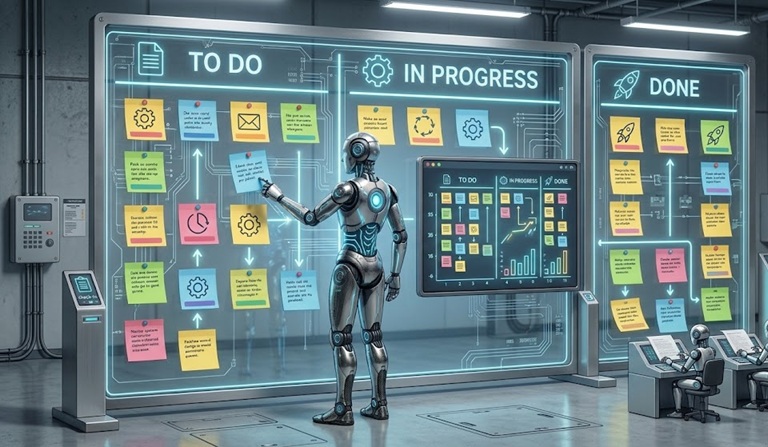
AI Agent vs AI Assistant Difference: Head to Head
Here is where the ai agent vs ai assistant difference becomes really concrete. Rather than describing the two in isolation, putting them side by side shows you exactly where the gap is and why it matters for real work.
| Feature | AI Assistant | AI Agent |
|---|---|---|
| Trigger | Needs your prompt to act | Can initiate and continue on its own |
| Task Scope | Single exchanges or short threads | Multi-step, complex workflows |
| Tool Use | Limited or none | Frequent, often essential |
| Memory | Usually resets per session | Often persists across tasks |
| Autonomy | Low, you guide every step | High, works toward a goal independently |
| Best Use Case | Q&A, drafting, brainstorming | Automation, research, operations |
| Setup Required | Minimal | Moderate to significant |
Reading through this table, you can already start to see which one maps to your situation. If you need quick answers and creative help throughout your day, an assistant is the right fit. If you are trying to eliminate repetitive multi-step workflows and reduce coordination overhead, an agent is worth the investment in setup.
Things To Know Before Choosing Between the Two
Before committing to either path, there are a few things that are easy to overlook and important to understand upfront.
Your goal determines your tool. If the task has a fixed, predictable output, an assistant is often faster and cheaper. If the task has multiple steps, variable conditions, and requires interacting with outside systems, an agent will outperform any assistant over time.
Agents require clear instructions. The more autonomous the system, the more important it is that your goal is specific. Vague briefs produce vague results. This is true for humans and it is doubly true for agents.
Assistants are more forgiving. Because a human is guiding every step, assistants are less likely to go off the rails on an important task. They are also easier to correct mid-conversation. Agents operating independently can compound an early mistake across many subsequent steps.
The architecture matters. Building on a platform with a well-designed system architecture makes a significant difference in how reliably an agent performs in production compared to a demo environment.
Cost scales differently. Assistants typically charge per message or per token. Agents can make dozens or hundreds of tool calls to complete a single task, which adds up quickly. Designing your agent workflows with efficiency in mind from day one is a habit worth building early.
You do not have to choose permanently. Many effective setups use both. An assistant handles the day-to-day conversational needs while an agent runs scheduled or triggered workflows in the background. They are not mutually exclusive.
IMAGE SUGGESTION: A person sitting at a desk with two monitors. One screen shows a chat interface representing an assistant, and the other shows an automated workflow dashboard representing an agent. Relaxed, productive atmosphere, no text visible on screens or in image.
Real-World Scenarios: Which One Actually Fits?
Talking about features in the abstract only goes so far. Here is how the ai agent vs ai assistant difference plays out across situations that come up in real work.
| Scenario | Best Fit | Why |
|---|---|---|
| Drafting a client proposal | AI Assistant | Single-session task with human oversight |
| Monitoring a data pipeline and alerting on failures | AI Agent | Ongoing, multi-condition, autonomous monitoring |
| Answering customer support questions | AI Assistant or Agent hybrid | Depends on volume and complexity |
| Researching competitors and compiling a report | AI Agent | Multi-step, requires web access and synthesis |
| Brainstorming marketing angles | AI Assistant | Creative, conversational, short-lived |
| Managing and routing incoming emails | AI Agent | Repetitive, rule-based, high volume |
| Explaining a technical concept to your team | AI Assistant | One-time, knowledge-based, single output |
The pattern here is clear. Tasks that are creative, conversational, and short tend to suit assistants. Tasks that are operational, repetitive, multi-step, and high-volume tend to suit agents. And there is a large middle ground where the right answer depends on your specific setup and tolerance for autonomous action.
Exploring the full feature set of the platform you are considering helps you figure out which category your use case actually falls into, because some tools blur the line in interesting ways.
IMAGE SUGGESTION: A simple two-path road illustration. One path is labelled with icons for conversation and a document. The other path shows icons for a workflow diagram and gears turning. A person stands at the fork deciding which way to go. Clean, minimal flat design, no text on image.
Why, How, and Which: Making the Call
Why does the distinction matter? Because using an assistant for a job that needs an agent means constant manual supervision. Using an agent for a job that needs an assistant means over-engineering a simple problem. Both waste time and money in different ways.
How do you decide? Map out the task from start to finish. Count the steps. Identify which ones require outside tools or data. Check whether conditions vary each time or stay the same. If you have more than five steps, outside dependencies, and variability, lean toward an agent. If you have one or two steps and a human reviewing the output anyway, an assistant works fine.
Which one is actually better? Neither is universally superior and that is the honest answer. The best choice is the one that matches the complexity of what you are trying to do. A brilliant agent deployed for a task that a basic assistant could handle in seconds is just expensive overhead. A basic assistant deployed for a workflow that requires twenty connected steps is a bottleneck wearing a helpful face.
For practical guidance on getting started with either approach, the step-by-step guide is a useful resource for moving from this decision point into actual implementation without getting lost in technical details.
IMAGE SUGGESTION: A clean balance scale illustration with a robot assistant figure on one side and an agent workflow diagram on the other, visually weighing the two options. Modern minimal design, neutral background, no text on image.
Final Word on the AI Agent vs AI Assistant Difference
After walking through how each works, where they shine, and how to choose between them, the ai agent vs ai assistant difference really comes down to autonomy and scope. Assistants are responsive tools that make you more capable when you are actively working. Agents are autonomous systems that keep working even when you are not.
Both have earned their place in a modern workflow. The mistake is not picking one over the other. The mistake is grabbing the wrong one for the task at hand and wondering why results feel off. Now that you can tell the two apart clearly, that mistake is a lot easier to avoid.
Frequently Asked Questions
Is an AI assistant the same as an AI agent?
No. An AI assistant responds to prompts and helps with individual tasks, while an AI agent pursues goals autonomously using tools, planning, and self-evaluation across multiple steps.
The assistant waits for your input at every stage. The agent takes a goal and handles the execution largely on its own.
Who are the Big 4 AI agents?
The four most recognised players in the AI agent space are OpenAI, Google, Anthropic, and Microsoft.
Each brings a distinct approach. OpenAI leads on model capability and developer adoption. Google integrates deeply with search and data. Anthropic focuses on safety-focused reasoning. Microsoft leads enterprise deployment through Copilot and AutoGen.
Is ChatGPT an AI agent?
In its standard form, ChatGPT is an AI assistant. When connected to tools like web browsing, code execution, or external APIs, it begins operating with agent-like behaviour.
OpenAI has been steadily expanding its agent capabilities, so the line between the two continues to shift with each product update.
What are the 5 types of AI agents?
The five main types are simple reflex agents, model-based reflex agents, goal-based agents, utility-based agents, and learning agents.
They range from basic rule-following systems all the way to agents that improve their own performance over time based on past experience.
What are the top 3 AI agents right now?
Three of the most widely used AI agent frameworks today are LangChain Agents, Microsoft AutoGen, and CrewAI.
LangChain offers strong developer flexibility. AutoGen specialises in multi-agent collaboration for enterprise environments. CrewAI organises agents into role-based teams that divide complex tasks among specialised members.